
Our summer on-ice programs are FULL. We’re planning Controlled Scrimmages for August as well as our weekly development and drop in sessions for the fall. Click the button below to get on the contact list.
GRIT Hockey runs various on-ice development programs for minor players from ages 7-15. Most of our players are playing a minimum of Rep level hockey, but as long as your player has the basics of skating, handling, and shooting, the deep desire to learn and improve is all they require.
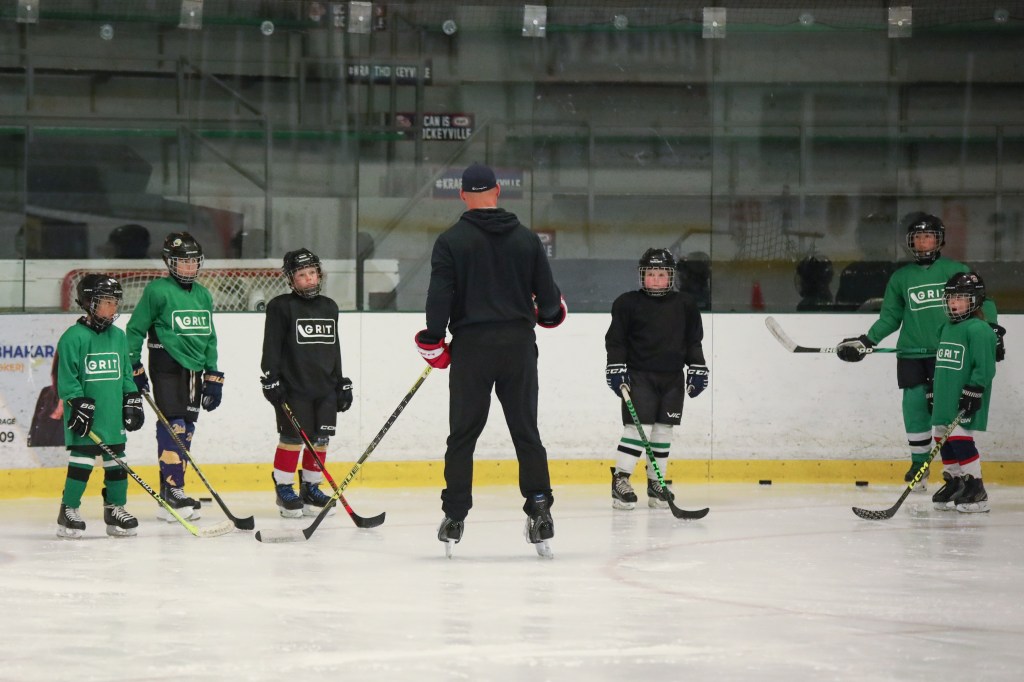
The goal of our on-ice hockey development program is to:
- Make high-quality on-ice training as affordable as possible
- Run a program that is professional, organized, and responsive
- Build resilience, esteem, and confidence in young athletes so they can succeed both on and off the ice.
We follow the G.R.I.T. formula (growth, resilience, intensity, tenacity) to strengthen mindset, build work ethic, and increase IQ while teaching players to master the technical basics.
Our sessions help players achieve:
A learning attitude: we foster an environment where it’s OK to make mistakes, test yourself, and find out where your limits are so you can grow beyond them. If you allow players to stay conservative in practice or refuse to take risks (out of concern for what other players on the ice will think), it stunts their growth.
Vision and Anticipation: we teach players to see the ice in a way that allows them to anticipate where the play is going and be both pro-active and re-active. Knowing what to do with the puck before it hits your stick or where you should be when the puck is not in your possession is critical for making successful plays and standing out.
Excellence in the Fundamentals: When it comes to technique and individual strategy, we stick to what works, drill it repetitively, and have a continuum in learning that accelerates development. Too much variety or elaborate (fancy) drills may look interesting from the outside, but it slows learning and progression.
Applicable Skills: the skills we teach (and the way we teach them) directly translates to game play. These days, we see kids who look elite in practice or excel when playing lesser competition, but when on the ice with real players they can’t get anything done. This is often due to teaching isolated skills in ways that aren’t relevant to the game. We teach skills that translate to game situations.
Strategy and Small Area Play: in our sessions we teach kids to play the right way. That means being defensively minded, protecting their ice, being in position, and using their teammates to push the play forward. In minor hockey we allow too much individual game play and end-to-end scoring that works when you’re 10 or 11, but gets you benched when playing the real game. As soon as full-ice play is introduced (if not before), players need to learn to battle for the puck, get to space, look for teammates, and move the puck effectively.
Our Coaching Philosophy
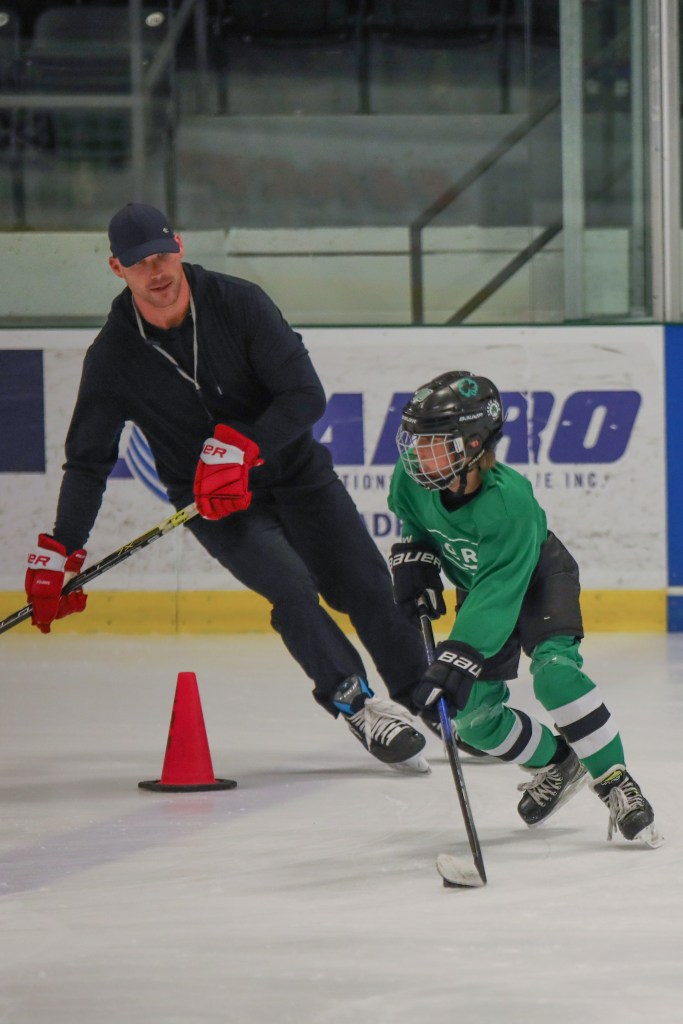
We run training that is structured and well-planned with straightforward expectations for players, parents, and coaches. This is a must when teaching kids skills and strategies on the ice. Otherwise, players will be unfocused, distracting, and inefficient. Of course, we want our kids to have fun learning the game, but it’s always more fun when you’re learning, getting better, and finding your flow.
When kids get to the age where peer-group starts to matter, worrying about fellow players think becomes more important than giving your best and getting better. We give players the ability to be vulnerable on the ice, make mistakes, and still come away with confidence. Most young players don’t develop to their full potential because they’re trying to avoid their weaknesses and “win the race” rather than move slowly and win the technique. We ensure that learning is maximized each session.
We supply coaching that recognizes player differences and adapts teaching style to the learning style of the player. How we talk to young players is critical, and we can’t coach all kids the same way. A coach can empower a player or make that young athlete feel small- resulting in that player not wanting to take risks and try their best. We speak to our players with intent, respect, and the understanding that different kids need different approaches.
On-Ice Programs Offered
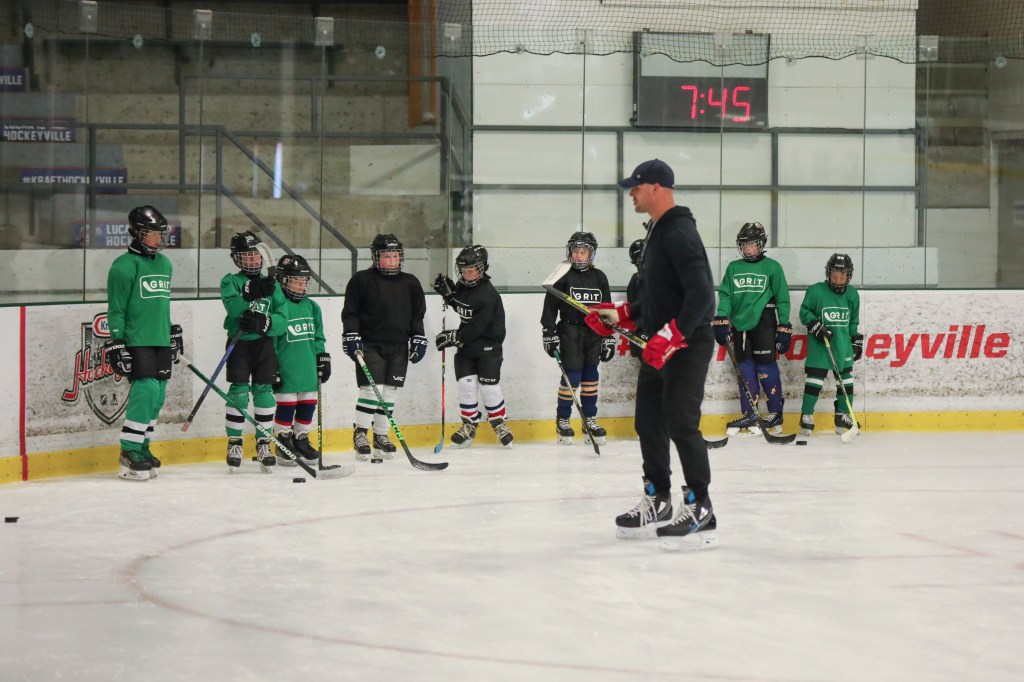
Drop In Skills and Weekly Skates: in our drop in Skills sessions we teach the fundamentals of skating (edge work, stride mechanics, speed, shiftiness, and momentum) puck control (proper handling, puck protection, offensive and defensive tactics), and both individual and game strategy. We ensure that each session is age and ability appropriate so the players on the ice see the most meaningful progression. In our weekly Skates, we run 5-10 week blocks at regularly scheduled session times where players in the group build their skills in a progressive manner. All skates (excluding scrimmages) are in small group format with no more than 15 players or less per session. Our small numbers allow for maximum coaching contact and accelerated learning.
Controlled Scrimmages: in our controlled scrimmage we teach players how to properly play positional hockey, manage space, and master team play. During these sessions we routinely stop play at key points to teach proper game strategy and decision making while keeping a fast pace and strong flow. We teach young athletes to “play the right way”: battle to get possession of the puck, work to maintain possession, be disciplined in your position, and properly use your teammates. We don’t allow selfish hockey on the ice.
Immersion Camps: Throughout the year our immersion camps integrate all aspects of the GRIT formula, including in-ice sessions, Dryland training, SAQ, and mindset development. Camps are typically 3-5 days in duration from 4-6 hours per day.
Spring Hockey: In 2025-2026, GRIT will introduce our Spring Hockey program where players can continue developing their game play and competing during the warmer months. Our spring teams will focus on disciplined positioning, teamwork, effective game strategy, and effort.
FAQ
Who are these skates for?
Our skates are designed for dedicated athletes who want to be on the ice becoming better players. Assuming your player has the basics down, attitude and the desire to improve matter more than current skill level. Sessions are focused, organized, and challenging, with a well-rounded exposure to skating technique, puck control, individual tactics, broader game tactics, and positional IQ (knowing where to be, when, and why).
What if my player isn’t competitive yet but wants to be?
Attitude is everything. If you have an ambitious young player who is hard working, their attitude matters more than current level of play. What we ask is your player have the fundamentals outlined in the below paragraph.
What entry skills does my player need?
Skaters should have fundamental skills and a strong work ethic. Forwards skating, backward skating, crossovers, turning ability, and basic puck control must be in your skater’s repertoire. While we want the skates to be fun for the kids, the focus is on improvement, and skaters should expect to be attentive and ready to work. All skaters and families will receive a code of conduct and set of expectations for on-ice behaviour that must be followed in order to remain in these skates.
 The Lucan Fitness Alliance