

The off-season is critical for serious hockey players to enhance their skills and physical condition. Practical dryland training during this period can make a significant difference when the next season rolls around. Here’s a guide focusing on five fundamental principles of a successful off-season: making movement the base, building strength early, avoiding over-conditioning, staying sharp on the ice, and choosing low-risk, low-learning-curve activities.
Make Movement the Base
The foundation of any effective dryland training program is movement. Hockey is a dynamic sport that requires players to be agile, flexible, and quick on their feet. Focusing on movement patterns that mimic on-ice actions while concentrating on range of motion is where all players should begin. Lateral shuffles, quick pivots, and explosive starts require range of motion.
Incorporate a variety of movements with challenging ranges, such as lunges, skater squats, hip rotation, flexion, and extension. Movement capacity improves speed and agility and helps develop muscle memory for everyday hockey movements. Functional training that emphasizes multi-directional movements can enhance your overall performance and reduce the risk of injury.
Build Strength Early
Building strength should be a primary focus early in the summer. A solid strength foundation improves your power on the ice, enhances endurance, and helps prevent injuries. Pulling, Pushing, Hinging, Knee Bend, and Various Rotation Patterns should be incorporated with some form of resistance.
It’s essential to follow a periodized strength program that gradually increases in intensity and challenges the athlete in an age-appropriate way. Start with a higher volume of lower weight to drill safe movement patterns, then progress to lower volume with higher weights to develop maximum strength (in older athletes). Incorporating plyometric exercises can also help build explosive power and can be easily integrated into a 10-minute warm-up.
Low Risk, Low Learning Curve
Incorporating activities with a low risk of injury and a low learning curve is paramount during the off-season. Players only have a few short months to make progress during this time, and if athletes constantly need to learn complex movements or succumb to injury, the off-season can be a wash. For this reason, I’ve moved away from much of the olympic liting and intense compound lifts that I used to integrate into off-season training.
There will always be some element of technique that an athlete has to learn and improve, but if it takes weeks to months to master a particular movement, it probably doesn’t belong in an off-season program. Choose fundamental movement patterns, keep them basic, and increase the load and intensity of those basic movements instead of making them overly complex.
Don’t Overdo Conditioning
While conditioning is important, it’s crucial not to overdo it, especially in the earlier weeks of off-season training. The initial goal should be maintaining a conditioning base while building range, strength, and power and transitioning to greater conditioning as the season approaches.
Hockey players need a balance of aerobic and anaerobic exercise. However, excessive cardiovascular training can hinder strength and power gains and increase the likelihood of injury.
When the time comes for endurance, focus on high-intensity interval training (HIIT) to mimic the stop-and-go nature of hockey. Short, intense bursts of activity followed by rest periods will condition your body for the high-intensity demands of the game without the risk of overtraining. This approach helps maintain strength and ensures you remain quick and explosive on the ice. One to two days of zone 2 style training can be performed on days that require a recovery focus and allow the athlete to keep moving while getting crucial rest.
Stay Sharp on the Ice
Even during the off-season, getting some ice time is vital to keeping your skills sharp. While dryland training builds your physical attributes, on-ice practice is essential for maintaining and improving your technical skills and integrating what you gain in the gym into your on-ice game.
For younger athletes, one day per week on the ice is enough, but as the season approaches, you should increase your time on the ice while decreasing your time in the gym. Focus on skills, drills, and strategy early in the off-season, and as you get closer to the fall, you can start to push the conditioning side.
Small area games and scrimmages can also be beneficial as they mimic game situations and help in maintaining your competitive edge, confidence, and attitude toward puck battles. Staying in touch with the ice ensures a seamless transition during the season.
Effective off-season dryland training is about more than just staying in shape; it’s about preparing your body and mind for the demands of the upcoming season. By making movement the base of your training, building strength early, avoiding excessive conditioning, staying sharp on the ice, and incorporating low-risk, low-learning-curve activities, you can elevate your game and enter the new season in peak condition.
Remember, the work you put in during the off-season lays the foundation for your success on the ice. Happy training!
Interested in joining one of our on-ice or Dryland training programs this summer? Hit the button below to get more information
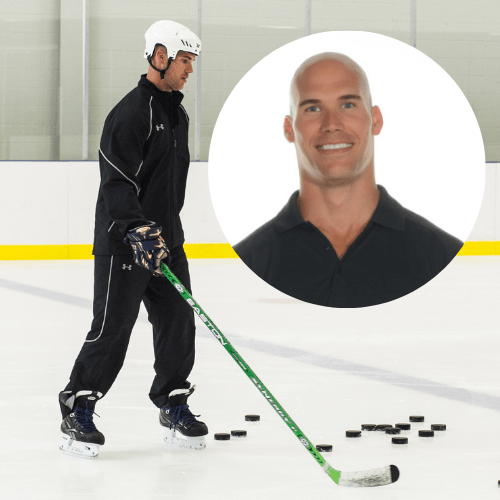
Tommy is a certified sports performance coach, sports nutritionist, and exercise physiologist as well as the founder of Hybrid Fitness, the Lucan Fitness Alliance, and HTS Hockey.
 The Lucan Fitness Alliance
Leave a comment